
Thirds
The building blocks of chords.
Thirds are the foundation of Western harmony. They are the stuff that chords are made of. Chords are constructed by stacking major and minor third intervals on top of each other.
Major third
Major third ahead
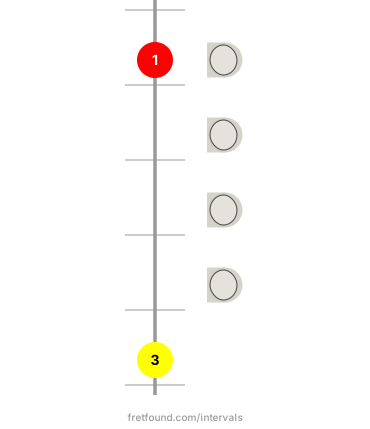
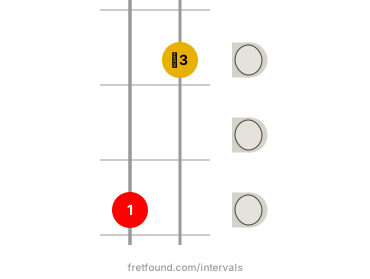
The major third shape ahead on the fretboard is "same string, skip three frets".
Major third behind
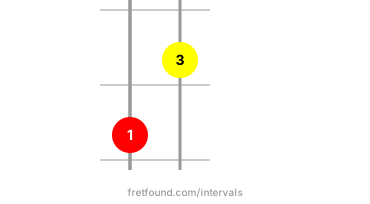
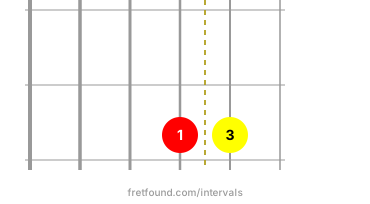
The major third shape behind is "one string over and one fret back".
Major third character
The major third is the fundamental sound of major harmony. A chord whose first two notes are separated by a major third is called a major chord. In fact, a "shell voicing" of a major chord can consist of just a root and major third played all by themselves.
The major third sounds strong and stable. The frequencies of two notes a major third apart overlap in a simple way, which our brains perceive as consonant and relaxed.
Minor third
Minor third ahead
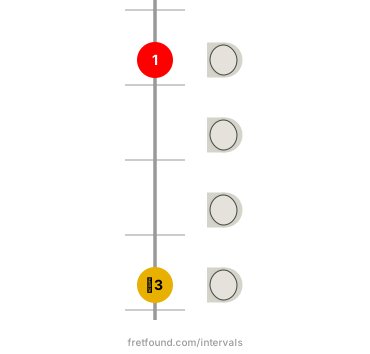
The minor third shape ahead is "same string, skip two frets ahead". Notice that it's one fret behind the major third.
Minor third behind
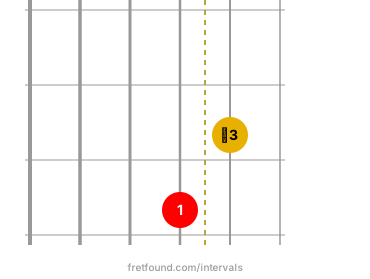
The minor third shape behind is "one string over, skip a fret back".
Minor third character
The minor third is the fundamental sound of minor harmony. A chord whose first two notes are separated by a minor third is called a minor chord, and a minor third can be considered a "shell voicing" of a minor chord.
The minor third sounds tense and moody, and sometimes sad. The frequencies of two notes a minor third apart overlap in a relatively complex way, which our brains perceive as dissonant and tense.
Stacking thirds
In almost all forms of Western harmony, most chords are constructed by "stacking thirds". This means starting with a major or minor third interval (which makes it a major or minor chord), and adding another major or minor third above that, to form a 3-note triad chord. We can keep going, too, making extended chords by stacking more thirds on top of that. Stacking thirds to four notes makes a seventh chord (because the fourth note is a major or minor seventh above the root). Keep going to make even more extended chords with compound intervals above the root (intervals greater than an octave: 9ths, 11ths, etc.).
A major third plus a minor third gives a major triad chord. A minor third plus a major third gives a minor triad chord. Stacking thirds starting from each note of a scale is called harmonizing a scale, which tells us which chords sound good together in a key. See the Introduction to Harmony for details.
Exercises
Practice exercises
-
Find ascending thirds across strings. Pick a random location on the fretboard and find major and minor third intervals on the adjacent higher-pitched string.
-
Find descending thirds across strings. Pick a random location on the fretboard. Imagine that you are starting on the higher-pitched note of the interval, and find descending major and minor third intervals on the adjacent lower-pitched string.
-
Play 2-note major and minor chord voicings. Practice playing thirds simultaneously on adjacent strings. These double-stops are shell voicings of major and minor triad chords, sometimes called "no 5" chords.
-
Play 3-note major and minor triads. Play a major third interval on adjacent strings, then stack a minor third on top--that's a major triad chord. Play a minor third on adjacent strings, then stack a major third--that's a minor triad.